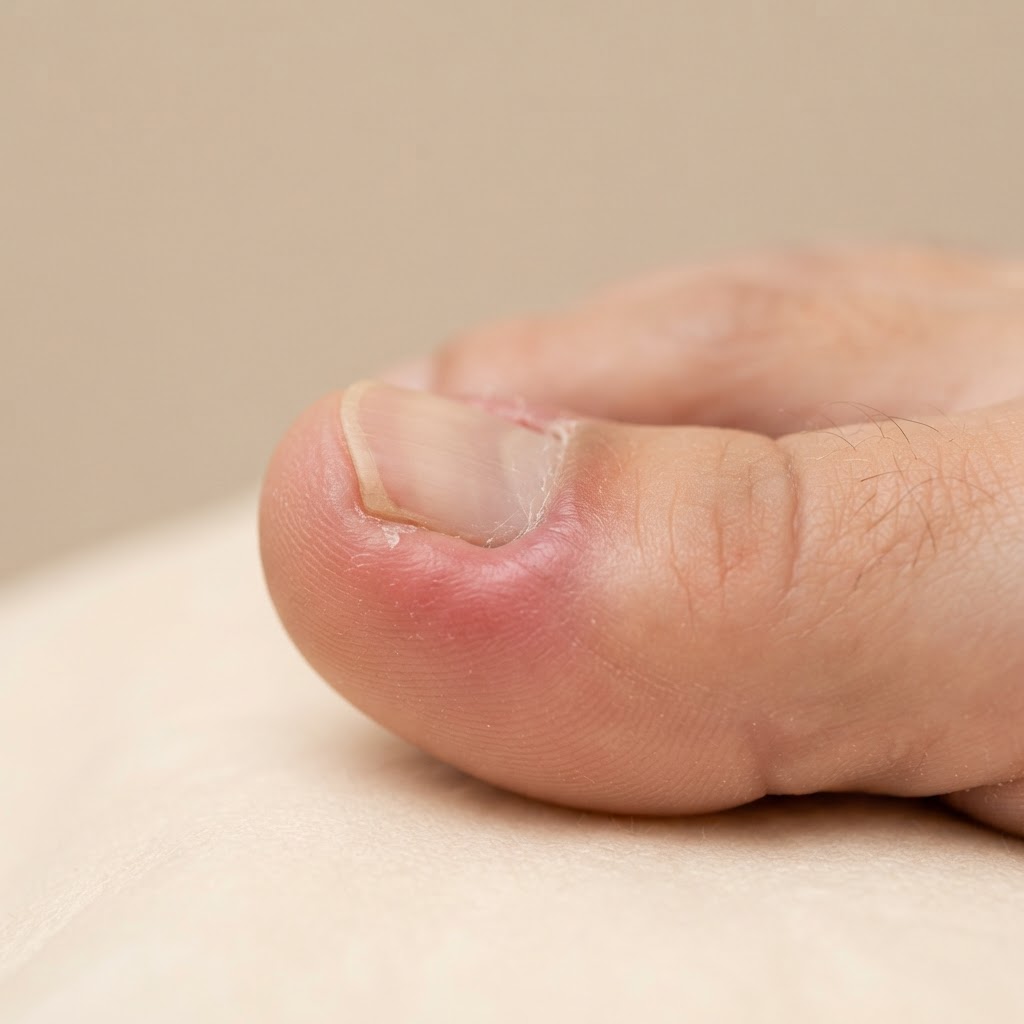
Ingrown Toenails
What Are Ingrown Toenails?
Ingrown toenails, also known as onychocryptosis, are usually caused by trimming toenails too short, particularly on the sides of the big toes. They may also be caused by shoe pressure (from shoes that are too tight or short), injury, fungal infection, heredity, or poor foot structure.
Ingrown toenails occur when the corners or sides of the toenail dig into the skin, often causing infection. A common ailment, they can be quite painful. They start out hard, swollen, and tender. Left untreated, they may become sore, red, and infected, and the skin may start to grow over the ingrown toenail.
Relief & Care Options
In most cases, treating ingrown toenails is simple. For mild cases, home care is often effective. In severe cases where an acute infection occurs, a minor in-office procedure may be needed. Known as partial nail plate avulsion, the procedure involves injecting the toe with an anesthetic and carefully removing the ingrown portion of the nail. We also offer the innovative Onyfix nail correction system — a painless, non-surgical treatment that gently guides the nail back to its natural shape.
Soak the foot in warm, soapy water several times each day.
Avoid wearing tight shoes or socks that compress the toes.
Antibiotics may be prescribed if an infection is present.
Onyfix correction system for a painless, non-surgical solution.
Partial nail avulsion for severe or recurring cases.
How to Prevent Ingrown Toenails
Trim toenails straight across with no rounded corners.
Ensure that shoes and socks are not too tight.
Keep feet clean and dry at all times.