Plantar Fasciitis & Heel Spurs
What Is Plantar Fasciitis?
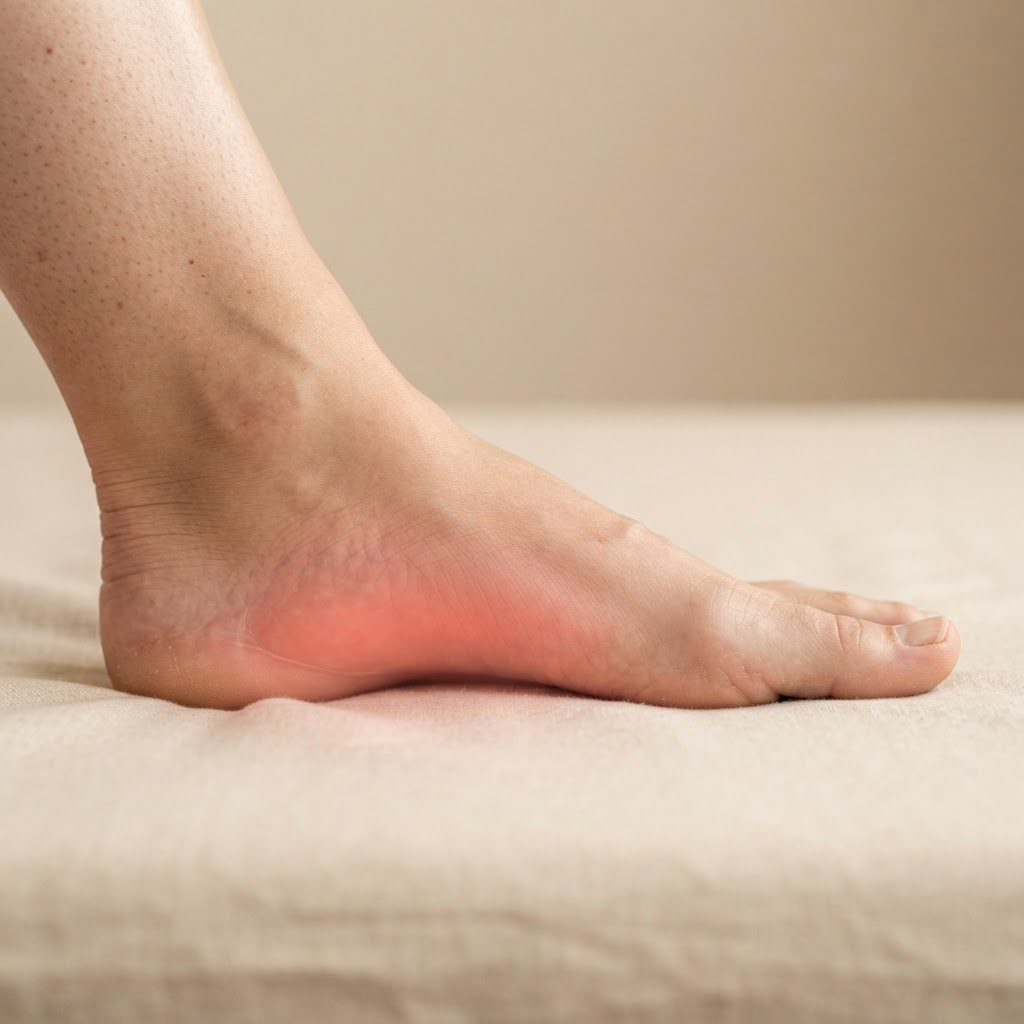
Plantar fasciitis is the term commonly used to refer to heel and arch pain traced to an inflammation on the bottom of the foot. More specifically, it is an inflammation of the connective tissue, called the plantar fascia, that stretches from the base of the toes, across the arch of the foot, to the point at which it inserts into the heel bone.
Overpronation is the most common cause of plantar fasciitis. As the foot rolls inward excessively when walking, it flattens the foot, lengthens the arch, and puts added tension on the plantar fascia. Over time, this causes inflammation. The pain is typically worst in the morning with the first steps of the day or after periods of rest.
First-Line Treatment Options
Anti-inflammatory medications to reduce pain and swelling.
Ice packs applied to the heel for 20 minutes several times a day.
Stretching exercises targeting the plantar fascia and calf muscles.
Custom orthotic devices to help control overpronation and support the arch.
Physical therapy to strengthen surrounding muscles and improve gait.
EPAT Shockwave & PRP Therapy
In persistent cases where conservative treatment has not provided adequate relief, we offer Extracorporeal Pulse Activation Technology (EPAT) — a non-invasive shockwave therapy that stimulates healing in the plantar fascia. We also offer PRP (Platelet-Rich Plasma) injections, which use your own blood's growth factors to accelerate tissue repair. Many patients experience improvement in symptoms following treatment, although results vary from person to person.